Harold Gilman often painted rooms and the ‘real things’ inside them. In these works he achieved a poignant atmosphere likeable to that of Johannes Vermeer and Édouard Vuillard.
InSight No. 188
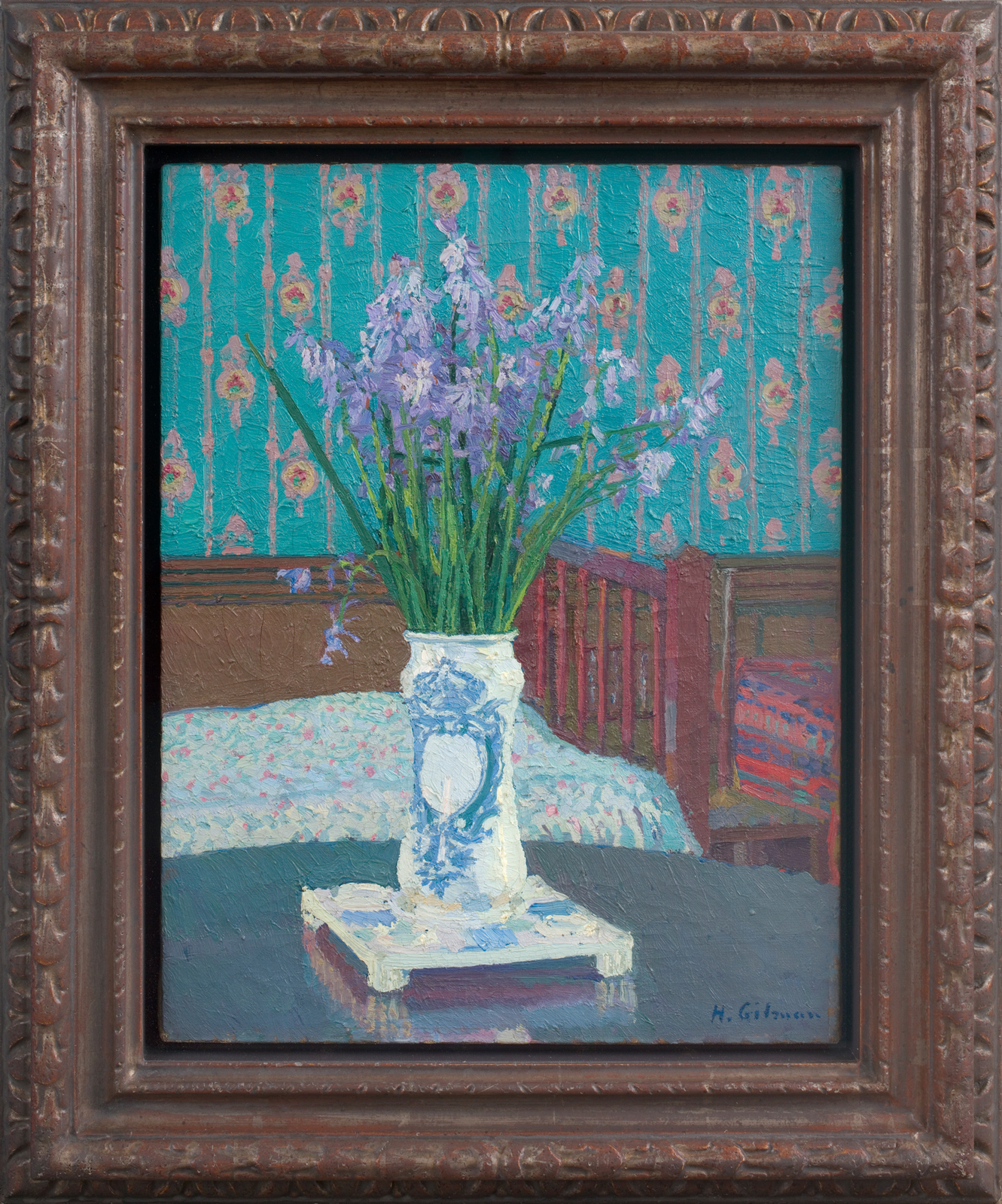
Harold Gilman, Interior, c. 1916
In Virginia Woolf’s novel Orlando, published in 1928, the transition from one century to the next is characterised by a few sudden and immediate changes. The nineteenth century becomes the twentieth with a flourish of activity: shadowy corners are illuminated by electric light, men are cleanshaven, women have grown narrow ‘like stalks of corn’, the ivy has receded, and carriages are propelled without horsepower. ‘A carriage without horses indeed!’, exclaims Orlando. The transition is also revealed by matters of interior design. ‘Curtains and covers had been frizzled up and the walls were bare so that new brilliantly coloured pictures of real things like streets, umbrellas, apples, were hung in frames, or painted upon the wood.’ Harold Gilman (1876–1919) was one of those artists who painted just such modern paintings, which index the end of the nineteenth century and the beginning of the twentieth.
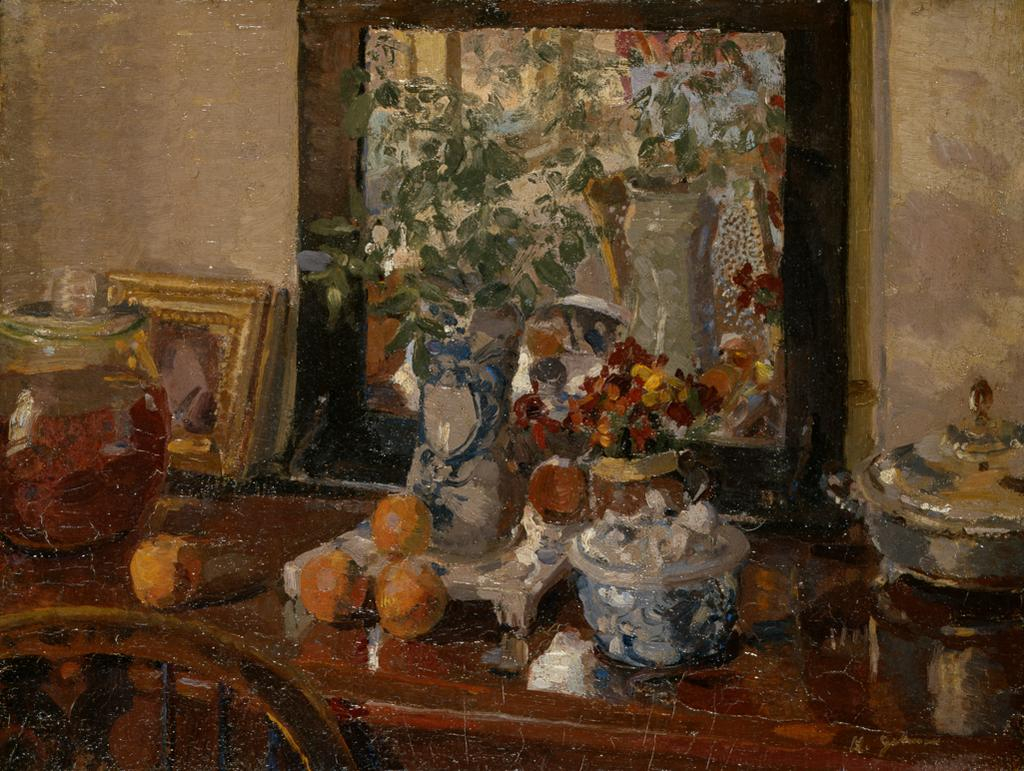
Gilman often painted his own lodgings. Like Virginia Woolf, but for different reasons, he was interested by a room’s accoutrements. To his imagination, the paraphernalia of furniture, panelling, cloth and table-top objects were the stuff of painting. He translated these appearances with careful precision and often achieved an unfathomable mood or atmosphere, which apparently emerged from the artist’s sustained intimacy with particular objects and spaces. A certain vase and square trivet of blue and white china, for example, appear in many of Gilman’s still-life paintings over an extended period. A transformation in his approach is strongly evident between a work of circa 1908 (see above), in which the vase among other objects is illuminated by reflected light, and Interior, where the vase is isolated and a flamboyant contrast is produced between the exaggerated colours of the bright cut flowers and the wallpaper behind them. In the latter painting, the curved surface of the ceramic is modelled with many delicate modulations of pale green, blue and violet, which palette Gilman used with growing intensity in the last years of his life.
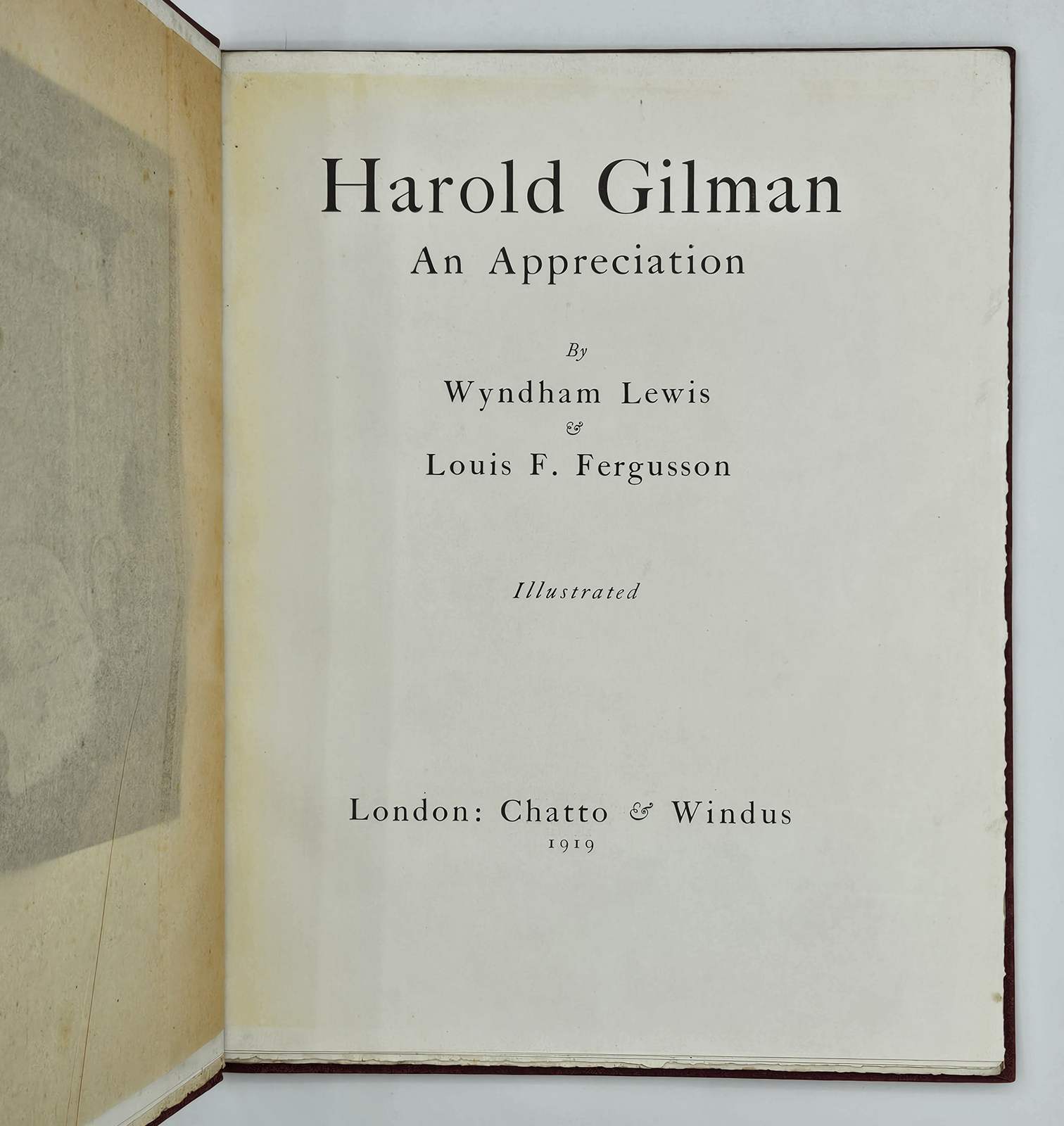
After his premature demise during the influenza of 1919, Gilman was celebrated in a volume published by Chatto & Windus that included two commemorative essays by his friends and some reproductions of his work. One of the essays was written by Louis F. Fergusson, an aspiring collector, who became acquainted with Gilman’s work when Spencer Gore brought him to a Saturday Afternoon at 19 Fitzroy Street in 1912. Many paintings were shown to him. A still life was presented, and Gore exclaimed, ‘Gilman’s breakfast!’
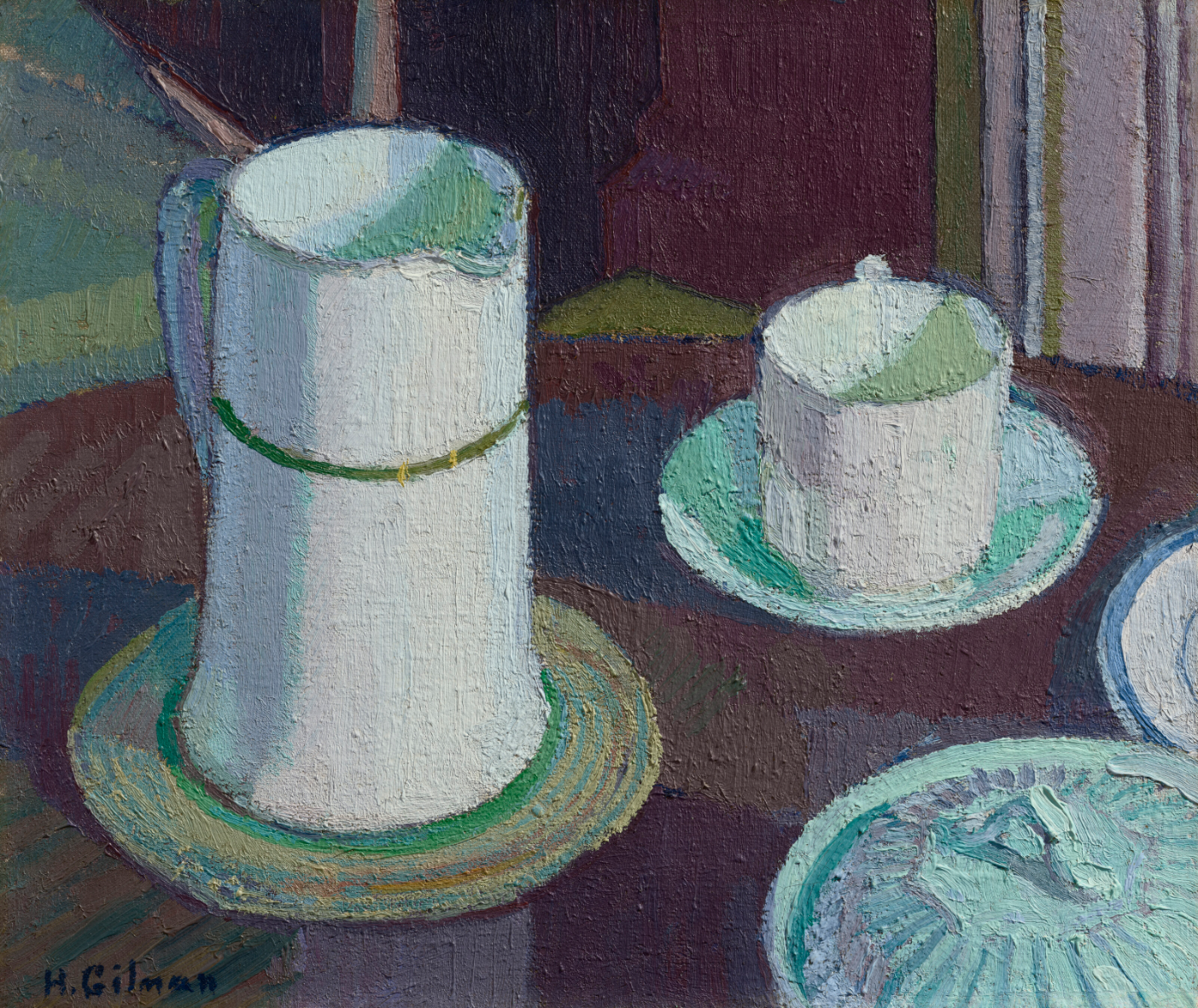
Fergusson seized on this phrase and regarded it as Gilman’s preferred subject. ‘Gilman’s breakfast! That was what Gilman liked painting—the intimate subject immediately to hand.’ With a small number of cherished objects including ‘a pair of contorted Indian figures, a mysterious Japanese painting on glass, a squat and sinister Chinese deity’, Gilman breathed into his paintings a special kind of quiet animation analogous to the mood of paintings by Édouard Vuillard and Pierre Bonnard and, before them, Johannes Vermeer. In paintings made after 1910, bright patterned wallpapers likewise contributed significantly to the peculiar visual and atmospheric impact of Gilman’s world. They were not an excuse but rather a reason to use brilliant, decorative paintwork; they belonged to the room where Gilman worked, and as such demanded attentive study because there was no other way to depict them accurately.
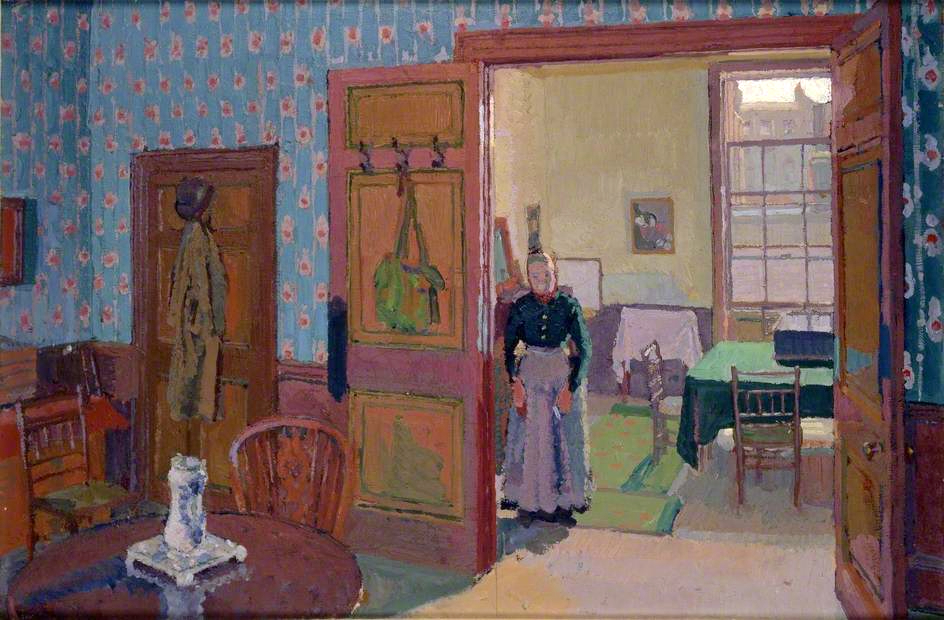
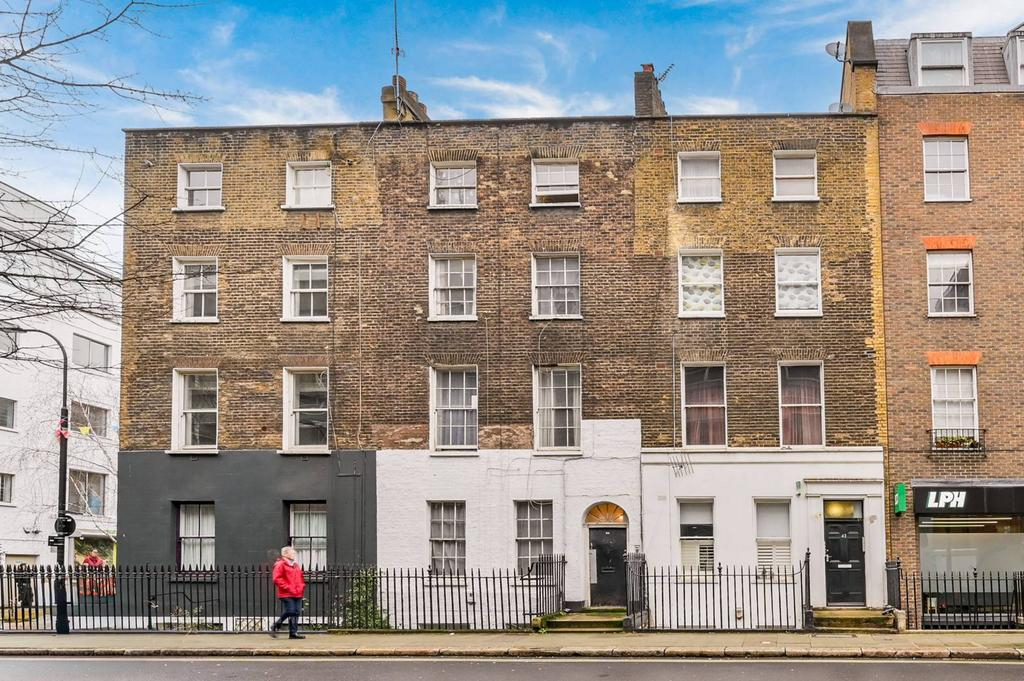
Between 1914 and 1917, Gilman lived in lodgings off Tottenham Court Road. Of his two rooms at 47 Maple Street, the front north-facing one was decorated with turquoise and salmon paper. (Fergusson wrote of how Gilman ‘gloried in the wall-paper of his sitting-room at Maple Street’.) The soft, reflected light in this room enabled the atmospheric stillness and delicate modelling of half tones that characterise the pictures Gilman made there.
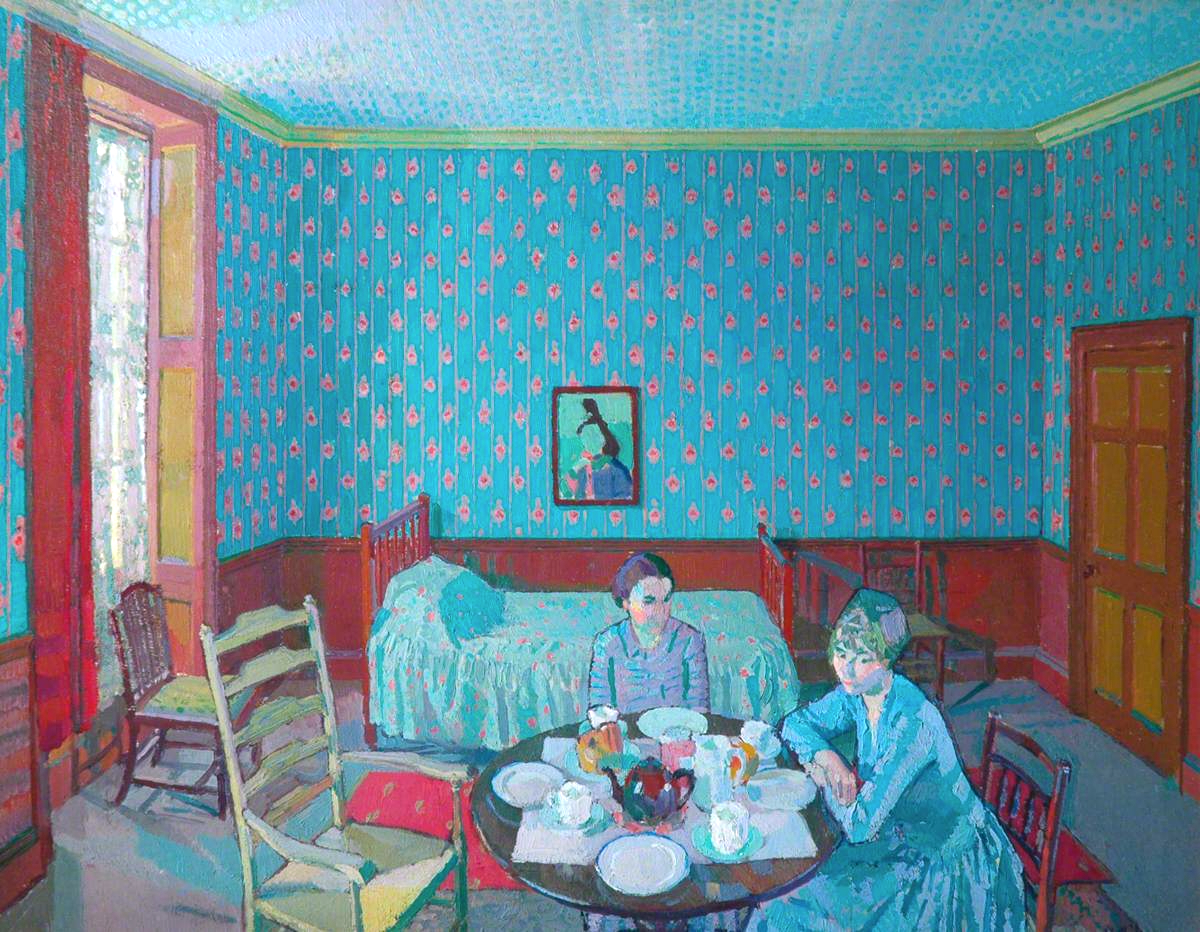
The paintings of his landlady Mrs Mounter are especially charged, but not merely because of the light. Her stiff gait and hunched shoulders create some equivalence between her and the furniture around her, notwithstanding the pathos of her bland but living gaze. In the Ashmolean Museum’s painting of Mrs Mounter, Gilman’s vase and square trivet stand empty on the round table.
By comparing Gilman with his early mentor Walter Sickert (1860–1942), an important stylistic distinction can be made. In the other essay from Harold Gilman: An Appreciation, Wyndham Lewis described Gilman’s discovery and righteous pursuit of ‘the Signac palette’ over Sickert’s ‘bitumenous painting, dirty painting’. (Gilman’s father was the Rector of Snargate in Kent and, with a touch of high-minded malevolence, Lewis thought Gilman ‘proud of his parsonic stock’.) Where Sickert graded his palette into tones that occupied a narrow range of colour and often applied sparing impasto ‘like a girl using lipstick’, Gilman like Van Gogh sought bright colour and an all-over richness of paint application. While Sickert has sometimes been criticised for a disconnect between direct observation and the appearance of his paintings, which he often developed from life drawings, many of Gilman’s interiors were painted from life and the loaded brush technique was for him a natural extension of the mood in the room. It suited the delicious colour and charged, excited quality that he perceived in his subjects: ‘real things like streets, umbrellas, apples’, pears, teacups, and vases of flowers.
Images:
Harold Gilman, Still Life, c. 1908, oil on canvas, 31.4 x 41.6 cm, Fitzwilliam Museum, Cambridge
Harold Gilman, Still life of a white cup, saucer and jug on a table, c. 1917–18, oil on canvas, 28.5 x 33.6 cm, Private Collection
The title page of Harold Gilman: An Appreciation (1919, Chatto & Windus)
Harold Gilman, Interior with Mrs Mounter, 1916–17, oil on canvas, 51 x 76 cm, Ashmolean Museum, University of Oxford
Harold Gilman, Tea in the Bedsitter, 1916, oil on canvas, 71 x 92 cm, Kirklees Museums and Galleries
Terraced houses in Maple Street, London
Harold Gilman, Interior (framed)